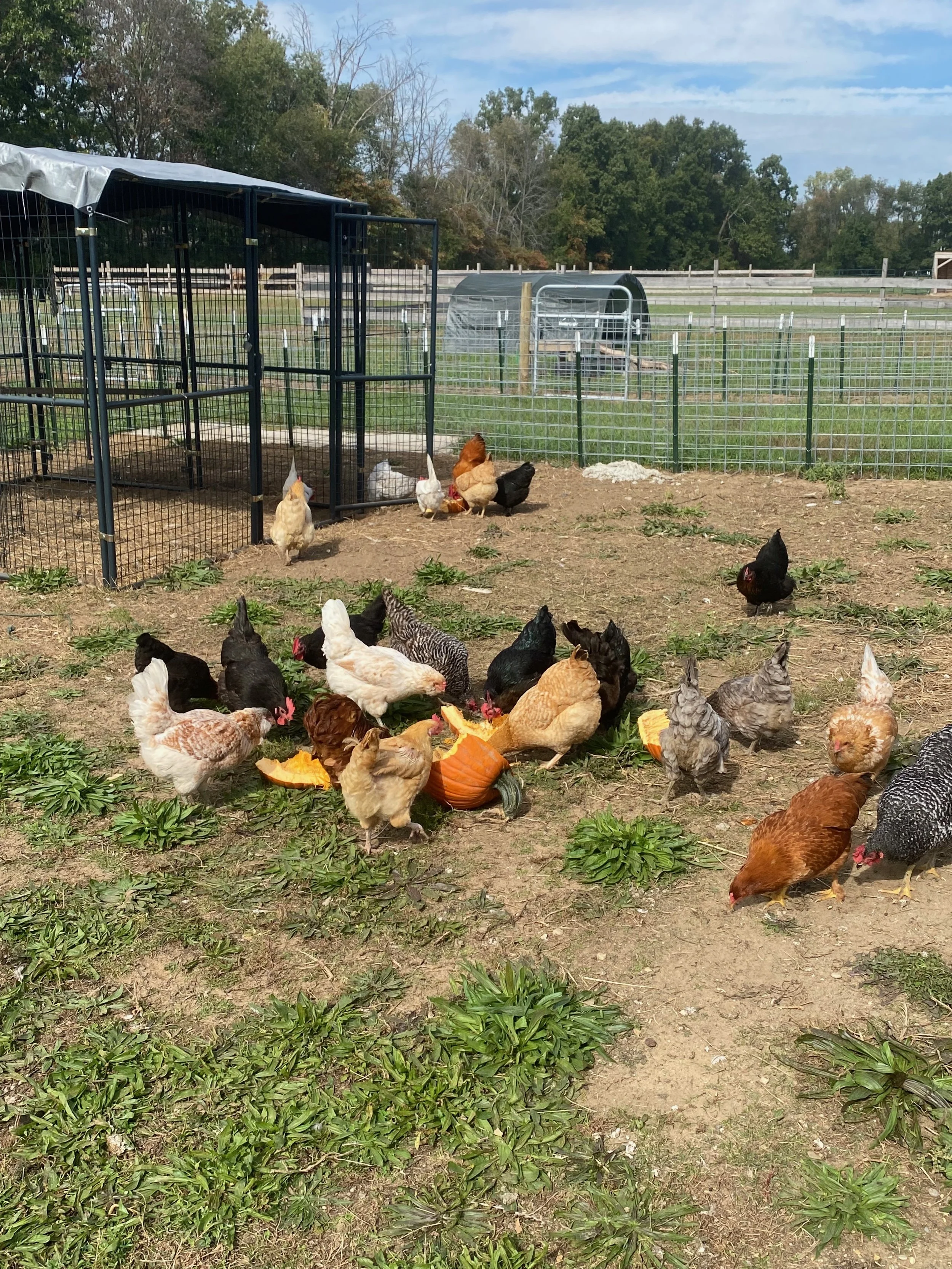
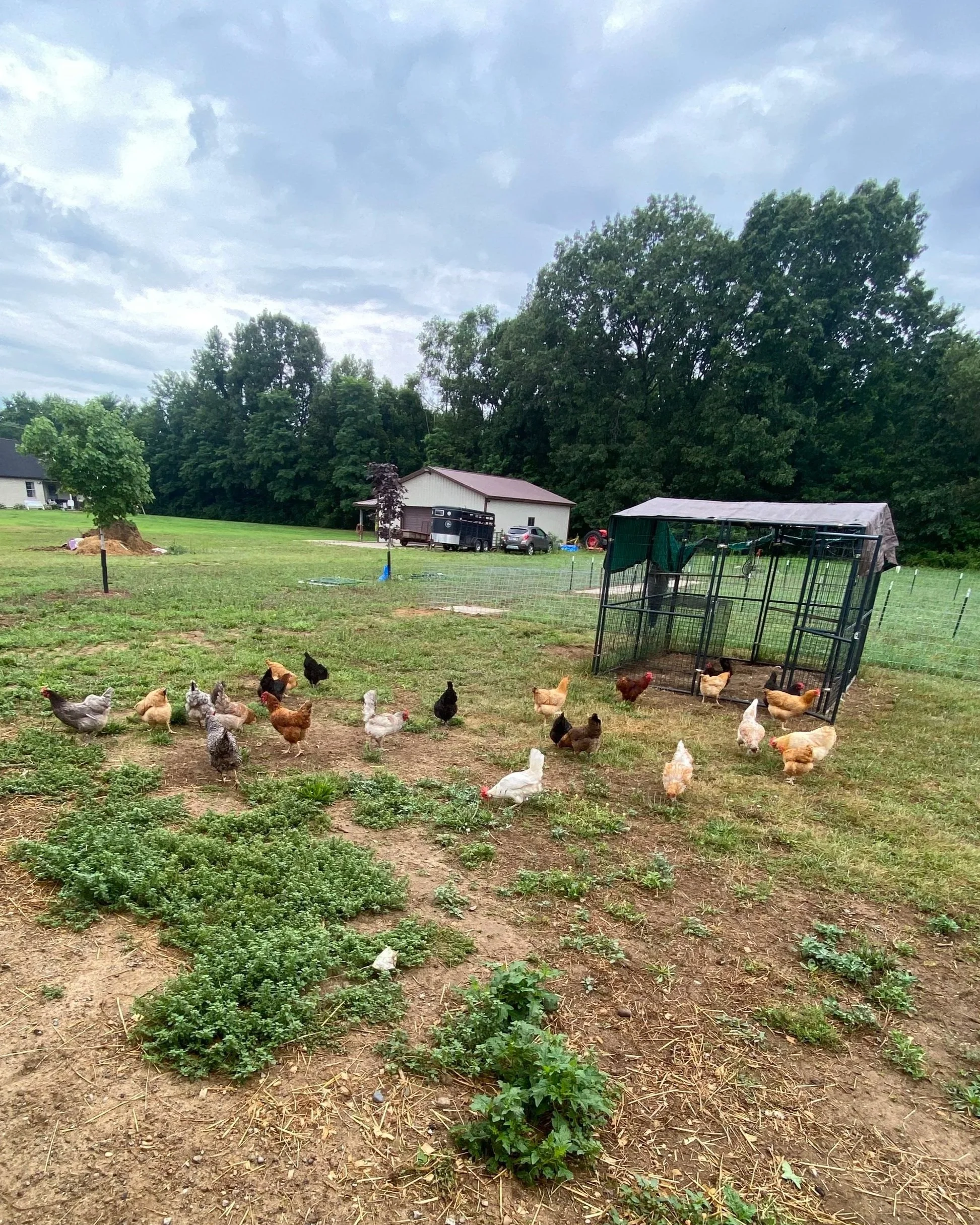
Eggs are only sold locally, at the roadside stand, or by texting Susan.
For local buyers, eggs are priced according to size and not color. It is a common belief that brown eggs are healthier than white or other colors. However, the color of the egg makes no difference in the quality of the egg. It is what a chicken eats that makes the eggs tasty. In addition, keeping the bloom on the egg until ready for use is the best way to make sure your eggs are going to taste the freshest!
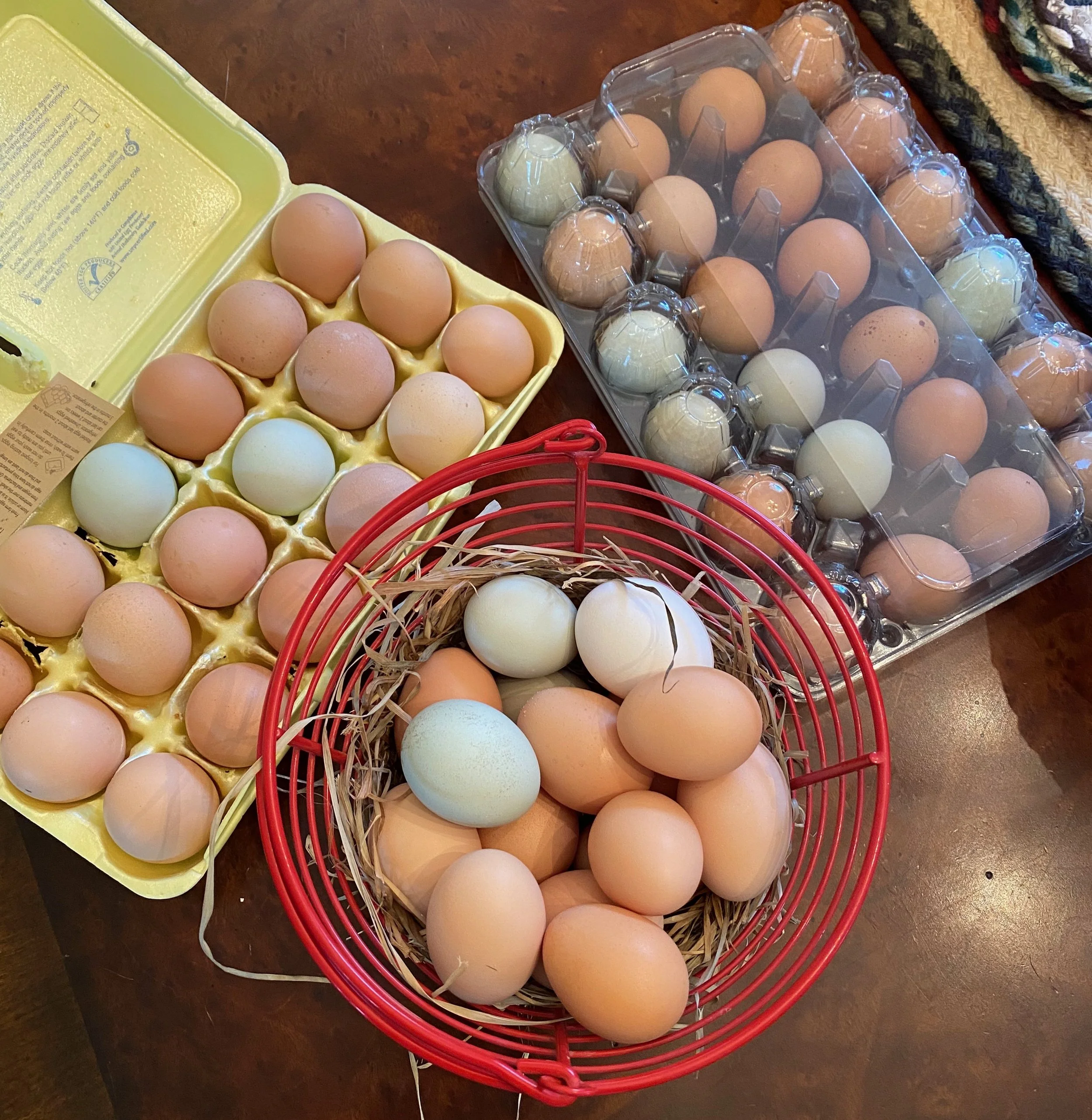

Fresh farm eggs have what is called a bloom or cuticle. It is an invisible protective membrane over the shell. It seals the egg from oxygen and bacteria. Grocery store eggs lack this protective layer and thus do not last as long.
For the longest-lasting eggs, do not wash your eggs until you are ready to eat them. To wash, rinse them carefully in cool/warm water without soap.
Washed eggs last about two months in the refrigerator. Unwashed eggs can last about 2 weeks on the counter and about three months in the refrigerator.